

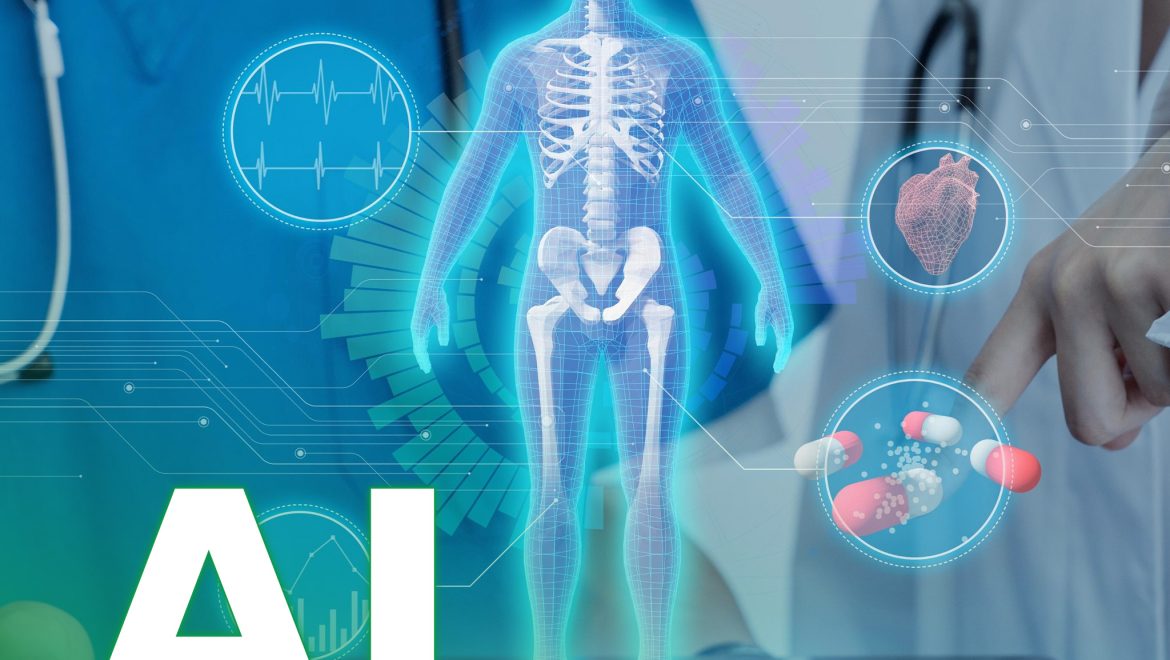
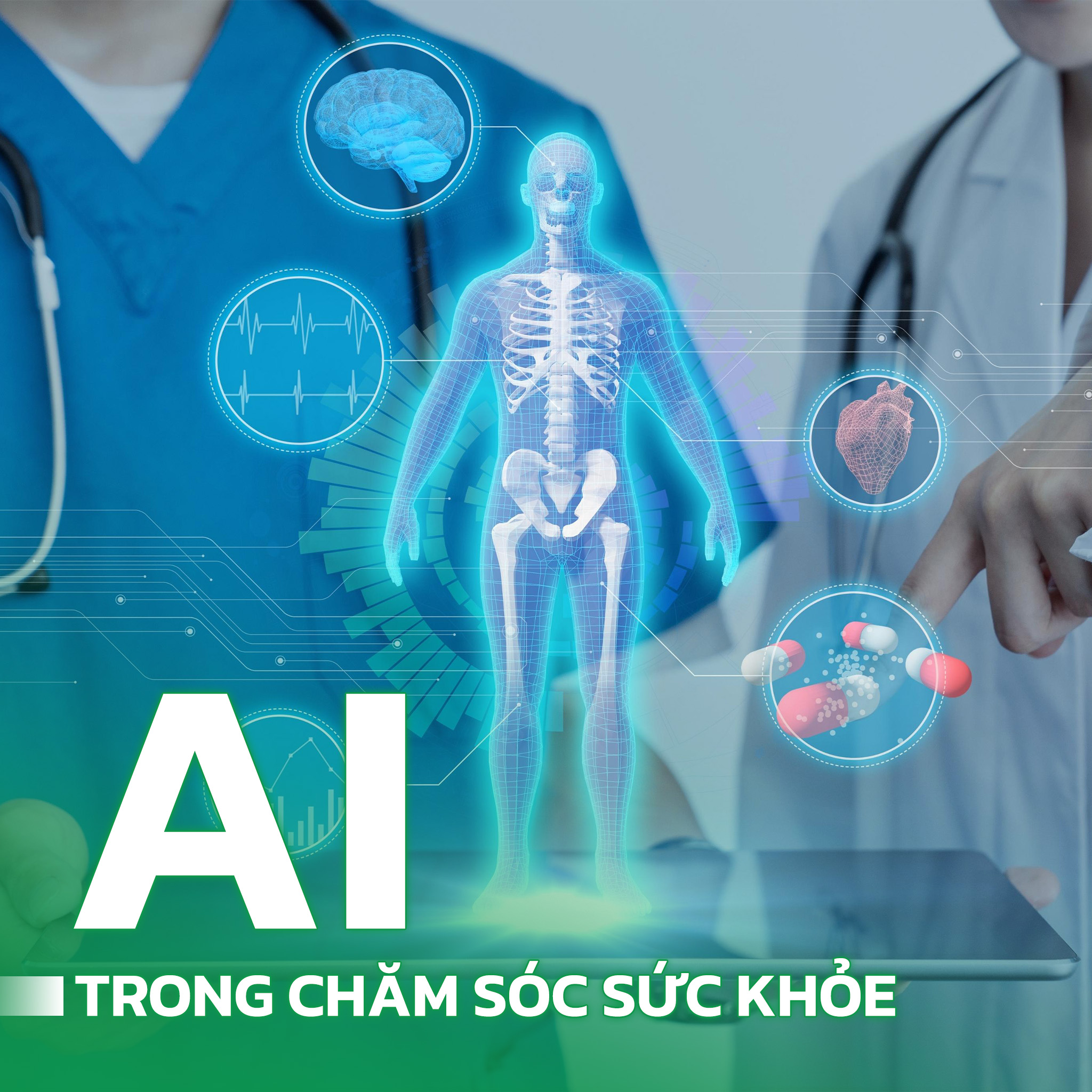
Artificial Intelligence (AI) is reshaping every industry — and healthcare is one of the sectors that benefits the most.
From early disease detection, health risk prediction to smart hospital management, AI not only helps doctors work more efficiently but also builds a data-driven healthcare ecosystem — moving toward proactive and comprehensive care for the community.
AI – The Pillar of Digital Transformation in Healthcare
Medical AI is not just an analytical tool; it is the technological “brain” that enables smarter and more efficient healthcare operations.
Key applications include:
• Medical Imaging Diagnosis:
AI helps detect cancer, lesions, or abnormalities in X-rays, MRI, and CT scans with high accuracy.
• Electronic Health Records (EHR):
AI automatically extracts and analyzes information, enabling doctors to access patient data in real time.
• Clinical Support & Consultation:
Medical chatbots can guide patients, suggest appointments, or monitor early symptoms.

Data – The Operating Foundation of Medical AI
Healthcare generates massive amounts of data — from test results and medical histories to data from smart wearables.
AI acts as the “key to decoding data,” transforming scattered information into valuable medical insights.
AI-powered cloud systems in healthcare enable:
-
Rapid and secure big data analysis
-
Seamless data connection between hospitals, clinics, and research institutions
-
Disease prediction by region, helping authorities proactively prevent outbreaks

AI for Community Health – When Technology Serves People
The greatest strength of AI in healthcare lies not only in efficiency but also in its social impact.
Thanks to AI, people in remote areas can receive online medical consultations; doctors can monitor patients from a distance; and public health campaigns can be deployed with greater accuracy.
AI is paving the way for a “Healthcare for All” model — where everyone has the right to access quality healthcare, regardless of geography or economic conditions.
Challenges and Future Directions
However, medical AI also faces major challenges such as:
-
Patient data security
-
Reliability of automated diagnostics
-
Human–machine collaboration
In the future, AI Governance in healthcare will play a crucial role — ensuring that AI is used ethically, transparently, and in service of the community.
Medical AI is not just a trend; it is an inevitable step in the digital transformation journey of the healthcare sector.
As artificial intelligence combines with intelligent health data, we move closer to a future where technology not only treats disease but protects and enhances human well-being in a sustainable way.


0 comments
Write a comment