

AI is advancing at an unprecedented pace. From creative assistance and customer service to business decision-making, it is deeply embedded in every sector.But this raises a vital question: Who controls AI—and how can it remain safe, transparent, and trustworthy? The answer lies in a concept shaping the future of technology: AI Governance.
1. What Is AI Governance?
AI Governance refers to the system of principles, policies, and standards ensuring AI is developed and operated ethically, transparently, and in compliance with laws.
In essence, it is the governance framework that manages AI risks and behaviors—similar to corporate or data governance systems.
Core pillars of AI Governance include:
- Framework & Policy: setting organizational AI rules.
- Data & Model Oversight: monitoring data quality and model reliability.
- Ethics & Risk Management: reducing bias and ethical risks.
- Compliance & Audit: ensuring transparency and regulatory alignment.

2. Why Governance Matters
While AI delivers immense benefits, a lack of control can lead to serious consequences – deepfakes, hiring bias, or data breaches.
Global initiatives include:
- EU AI Act (2024): the world’s first comprehensive AI regulation.
- OECD AI Principles: promoting transparency and fairness.
- AI Safety Summits (UK, US, Japan, Singapore): global discussions on AI safety and accountability.
AI Governance builds the trust bridge between humans and technology.

3. The Four Pillars of Effective AI Governance
- Transparency: AI must be explainable—users should understand why it made a decision.
- Fairness: eliminate bias and ensure objective outcomes.
- Accountability: human or departmental responsibility for AI outputs.
- Privacy & Security: protect user data and comply with standards like GDPR.
4. Where Businesses Should Start
Implementing AI Governance is not just theory—it’s a strategic step toward safe, sustainable AI use.
Key actions include:
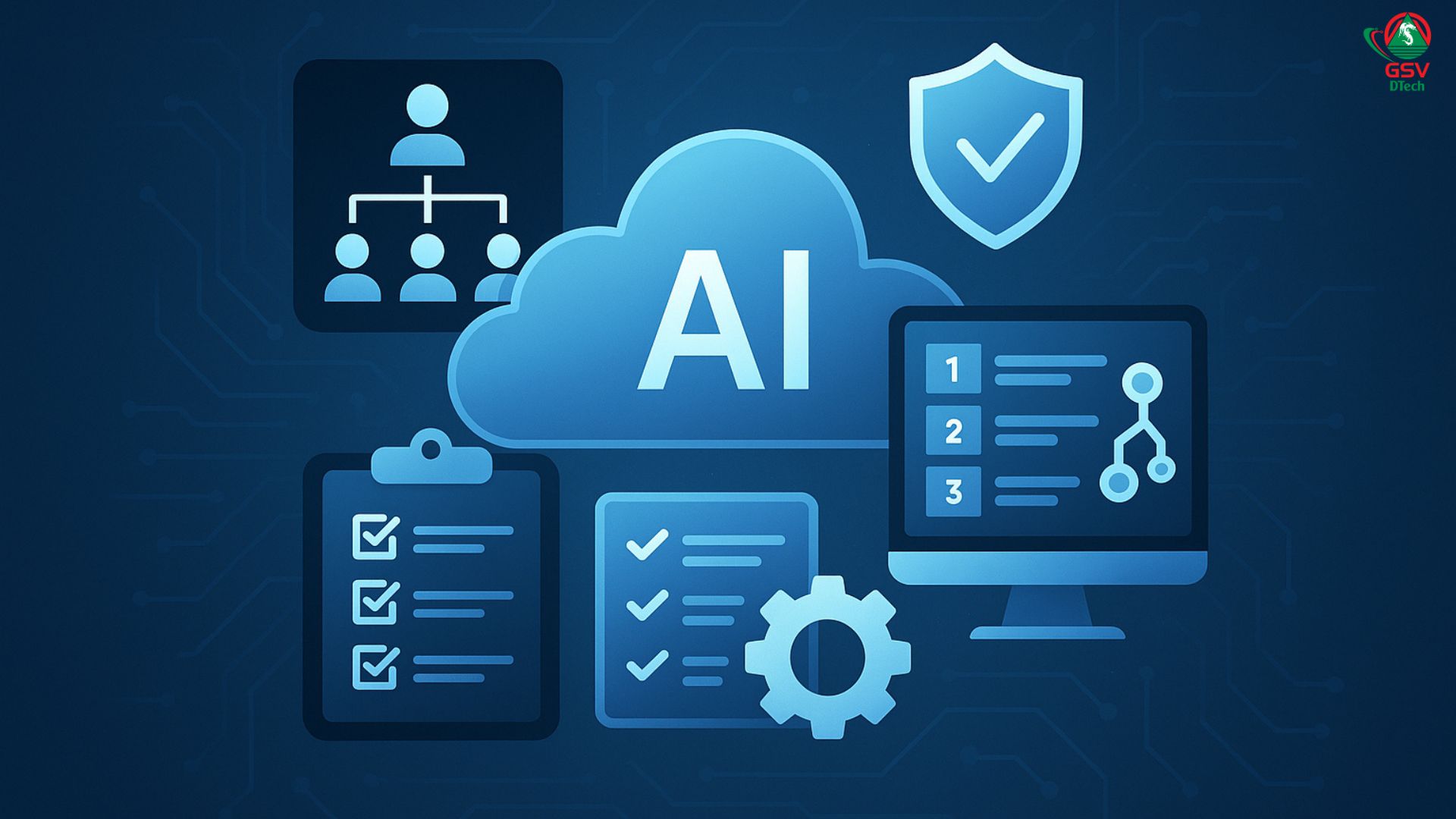
- Establishing an AI Policy Framework.
- Creating an AI Ethics Board.
- Conducting regular AI Risk Assessments.
- Integrating AI Governance with Data Governance.
- Using AI monitoring and auditing tools.
Early adopters of governance frameworks will gain not only legal compliance but also customer trust and brand credibility.
5. The Future: From Control to Trust
AI Governance is evolving toward automated governance, where AI can monitor and adjust its own behavior.
Emerging trends include:
- AI Governance-as-a-Service (AIGaaS): cloud – based governance platforms.
- AI Auditors: new roles dedicated to AI model auditing.
- Self – Regulating AI: systems capable of self – assessing transparency and reliability.
As AI grows more powerful, governance becomes essential to its survival. Technological trust will be the driving force of the AI era.
AI Governance is not a constraint – it’s the compass guiding AI toward safe, ethical, and human – centered development.
In the future, companies won’t just use AI – they’ll need to govern it, ensuring technology serves humanity, not replaces it.



0 comments
Write a comment